Author: Andrew C. Deck
If you glance skyward after dark, you’ll likely find a featureless haze where stars once gleamed. This phenomenon, called light pollution, occurs when excess artificial light from cities creates a visible dome of wasted electromagnetic energy. Light pollution is more than an aesthetic issue, as it puts many species of flora and fauna at risk—dehydrating plants, trapping insects, disorienting sea turtles, and disrupting diel vertical migration. Philadelphia witnessed these dangers acutely in October 2020, when 1,000 to 1,500 migrating songbirds, confused by the bright urban nightscape, slammed into skyscrapers with lethal force. These risks make it imperative that legislators, officials, and the courts take steps to address light pollution as an environmental issue.
Traditionally, Pennsylvania plaintiffs have addressed light pollution issues with nuisance, ordinance violation, or light trespass claims. The courts in some cases have recognized light pollution as an environmental issue.
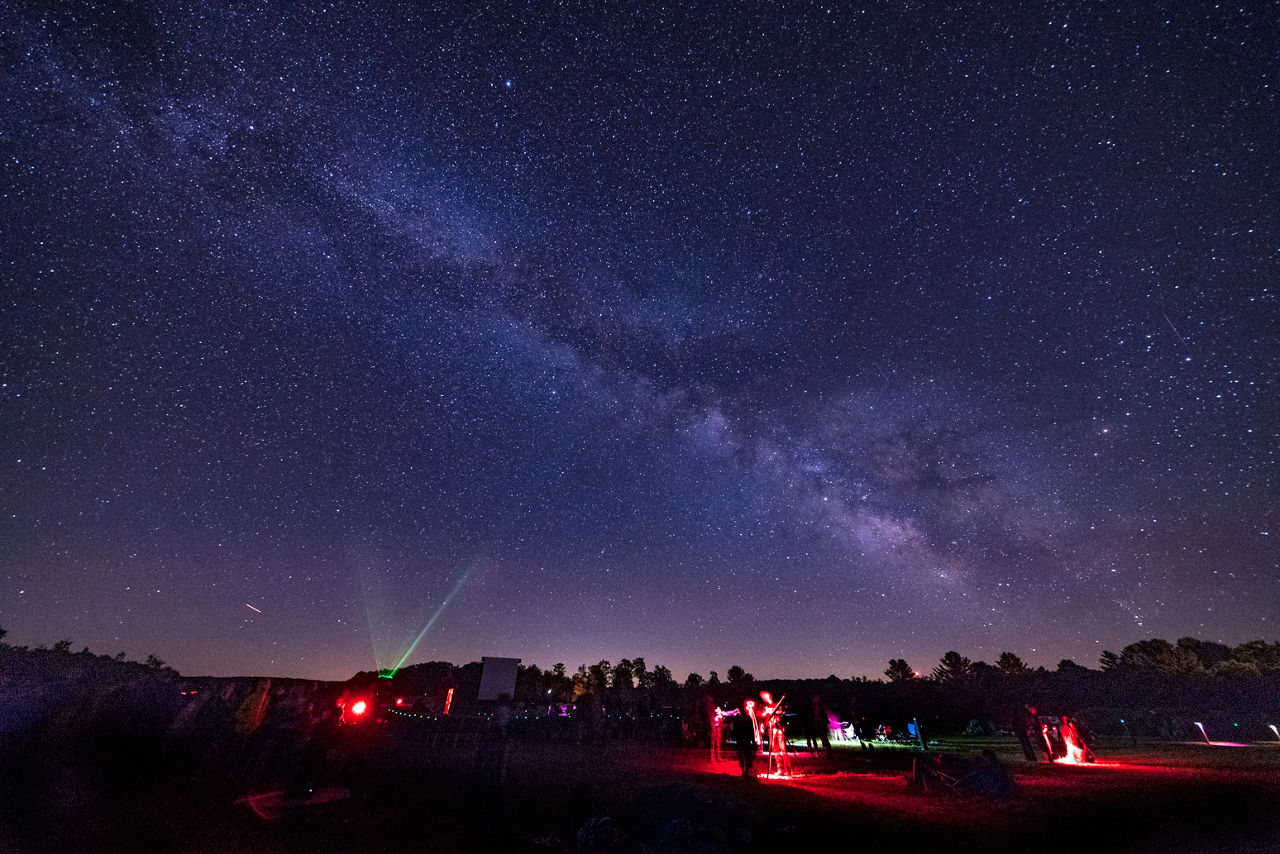
Advocacy groups have stepped in to address light pollution. Founded in 1988, DarkSky International seeks to preserve the night sky through research, public education, and lighting policy. DarkSky publishes eco-friendly lighting guidelines, summarizes relevant research, and certifies five classes of protected areas where light pollution is minimized. Pennsylvania’s Cherry Springs State Park has been a certified DarkSky Park since 2008.
Like DarkSky, the Pennsylvania Outdoor Lighting Council (POLC) helps communities minimize light pollution by advising municipalities on responsible practices and drafting model ordinances. The Council endorses lighting ordinances that are precise, enforceable, and effective. Both organizations recommend efficient, shielded, warm-spectrum luminaires as the gold standard for sustainable outdoor lighting. Warm light, which correlates to a color-temperature (CCT) of 3,000K, is far less disruptive to people and wildlife than blue light.
Groups like DarkSky and POLC have moved state and local governments to action. At the state level, the Pennsylvania House of Representatives has tried to pass HB 969, which would establish key lighting standards for public construction, renovation, and retrofitting projects. These standards include shielding, CCT limits, and automated dimming technology. Residential and environmentally sensitive areas would receive special protection, with residential lighting limited to 2,700K and environmental zones to 2,200K. Although the bill has stalled in committee as of October 2026, it represents a steadfast effort to address environmental light pollution in Pennsylvania. State lawmakers should pass this legislation, which has been made law in 19 states including Maryland, Delaware, and New York.
In 2021, Pittsburgh enacted its “Dark Sky Lighting Principles in Streetlights” ordinance. This law requires installations or renovations of ten or more public streetlights to adhere to DarkSky’s guidelines, with a few exceptions for public safety concerns. Although a notable and positive change, the ordinance’s narrow scope limits its impact.
Unlike Pittsburgh, Philadelphia doesn’t have light pollution regulations backed by clear requirements. Currently, outdoor lighting is regulated by provisions under chapters 14-700 (Development Standards) and 14-400 (Base Zoning Districts) of the Philadelphia Code. These standards, however, are structured around nuisance law and do not adequately address relevant environmental concerns. Section 14-707 provides general outdoor lighting guidelines, requiring developers to adopt shielding and efficiency standards and submit lighting plans to prove compliance. But unlike Pittsburgh’s ordinance and HB 969, 14-707 omits specific shielding language, lacks CCT requirements, and makes no reference to the practices and technologies recommended by DarkSky.
As currently written, Philadelphia’s lighting ordinances afford inadequate protection to the night sky’s ecological and aesthetic value. Nonetheless, the structure of the Philadelphia Code provides the city with ample avenues for improvement. The most obvious approach is to reform 14-707, adding precise language and incorporating DarkSky’s recommendations. Philadelphia could also revise Philadelphia 2035, the city’s current comprehensive plan, to include environmental lighting goals. Of the plan’s three overarching themes (Thrive, Connect, Renew), “Renew” would be the most appropriate place for lighting additions, given its environmental bent. Incorporating lighting goals within the comprehensive plan would be useful, as the Zoning Board (ZBA) may consider these objectives when ruling on zoning permits and special exceptions. This approach is not without drawbacks, as its effectiveness would rest on officials’ discretion rather than codified standards.
Philadelphia could also enact a dark sky overlay district under Chapter 14-500. Overlay districts are zoning districts that add additional use regulations to the base districts they encompass. Generally designed around an overarching goal, overlay districts typically cover multiple base districts. When overlay requirements conflict with base district requirements, the overlay requirements govern. A dark sky overlay could therefore establish uniformity across diverse base districts to achieve light pollution mitigation at scale. To create this overlay, Philadelphia officials could commission studies to map the city’s light dome and identify areas where observable reductions are possible and practicable.
Philadelphia and Pennsylvania have the legal infrastructure needed to preserve our skies, and ample reason for doing so. The night sky grounds us in our humanity, unlocking curiosity and creativity in young minds and connecting the generations now living with those who came before. This connection is as much a tenet of environmental justice as clean air and clear water. Politicians would do well to ensure that our stars do not forever fade from view.