Our visit to Temple’s Anthropology Lab was a lesson in the challenges that come with running such a space. The potential for the lab is enormous: the collection contains fascinating objects, and as Leslie told us, there are dissertations down there. With the appropriate resources, the lab could help both graduate and undergraduate students with research, training, and could even be an exhibit space. As it stands, however, the lab needs a lot of labor and assistance in ensuring it runs smoothly. I admire Leslie’s commitment to the repatriation of Native American remains through NAGRA. The process sounds incredibly complicated, and it was heartening to hear that Temple finally has put some money and energy behind this important process.
In regard to our possible contributions to the space, I am excited to begin sifting and sorting through objects recovered from a dig. My own research focus has included Philadelphia townships in the early national period, and so while this site predates my own interests by about a century, I look forward to learning more about this particular Germantown site. There are a number of fairly easy steps we as historians can take to improve the historical context available to anthropologists who would like to work with these objects, including connecting with the Germantown Historical Society, who I am sure would have information regarding the dig itself as well as the site’s history. The connection between archival and documentary evidence and historical archaeological materials is the goal of such digs, and I hope that we will be helpful to the anthropology lab even in some small way.
Small Things Forgotten, by James Deetz, provided both a foundation in the possibilities of historical archaeology and also a justification for its inclusion in historical methodologies. Especially for early modernists like myself, material culture and archaeology can provide a valuable window into the lives that people led, and how their things reflected both their values and the rhythm of their daily lives. While there are some aspects of In Small Things Forgotten that certainly come off as dated, I appreciated the technicality of the book. Specific case studies which tie into specific dig sites allow the reader to understand the contributions that historical archaeology can provide. The variety of objects which Deetz examines in his book also demonstrate the wide range of applications for this methodology As an early modernist interested in Philadelphia, many of the examples were perfectly suited to my research interests. However, these methods can be brought to bear on a wide range of subjects, regions and time periods.
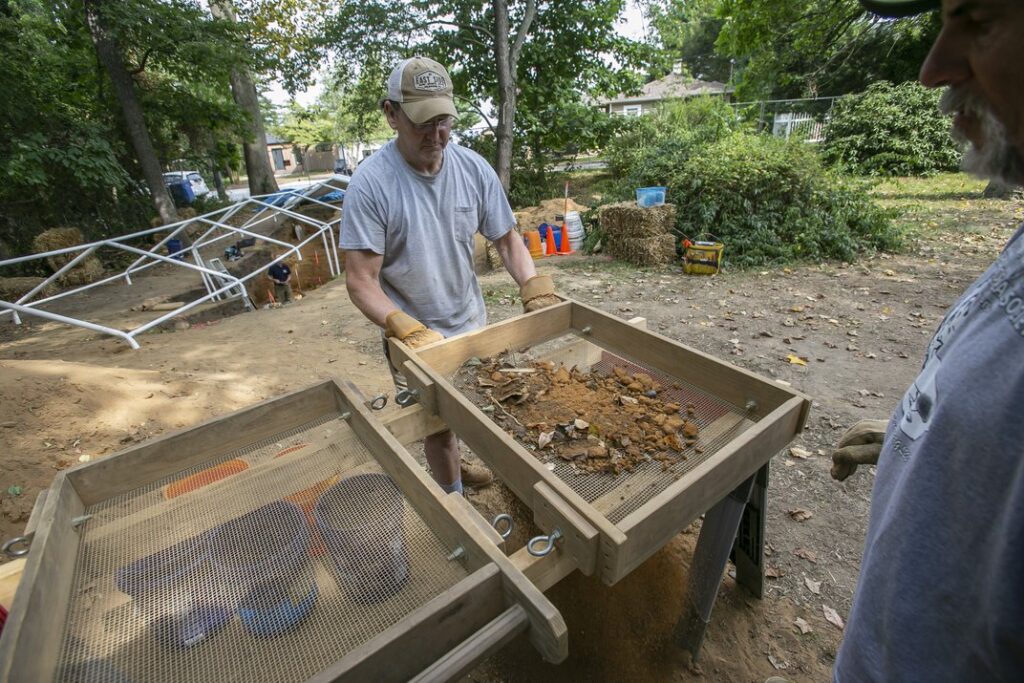
In my own experience, I have been privileged enough to have visited an active archaeological site. Along with a small group from the Museum of the American Revolution, I was able to visit the excavation at Red Bank Battlefield in New Jersey. In the summer of 2022, at the end of a dig aimed at getting the public interested in and engaged with historical archaeology, a volunteer discovered a human femur. The dig, which was immediately closed to the public, eventually excavated the remains of at least 13 Hessian soldiers who were killed at Fort Mercer in 1777. I was there as a visitor and not as a participant, but we were lucky to be able to speak to Wade Catts, the head archaeologist on the dig, and Jen Janofsky, the historian at the site. Aside from the human remains, the trench turned mass grave was also full of material culture, including musket balls and coins. The way these soldiers died, and what they were and were not buried with, can tell historians a lot about the Battle of Red Bank and the American soldiers stationed there. I found the visit a little unsettling – I was very moved by seeing the remains of young men who died quite violently, and far from home. But the opportunity to visit an ongoing dig was incredibly valuable. Before MoAR was built (and long before I started working there) an archaeological dig on the site of the building excavated nearly 85,000 objects from the site (mostly from privy sites). I had been listening to people talk about it for years, and visiting Red Bank was an opportunity to see a dig in process.