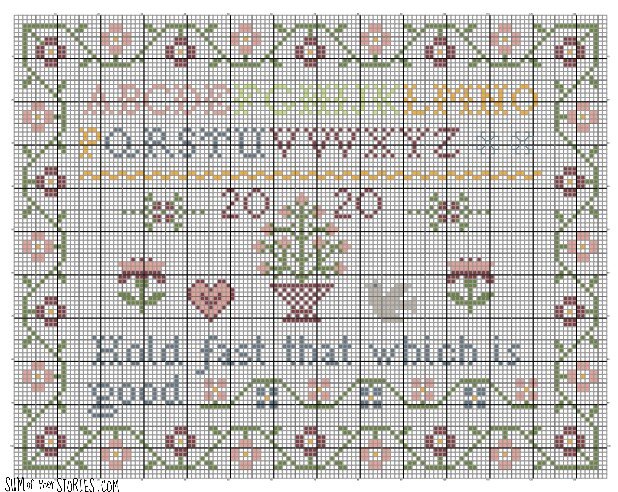
This week’s readings on textiles illustrate the complex and sometimes fraught relationship that textile work, specifically embroidery and cross-stitching, have to femininity and concepts of art. “The Unfinished Stocking,” the final chapter of Laurel Thatcher Ulrich’s The Age of Homespun, a foundational text in feminist material culture, ends with the male attitude of the nineteenth century man regarding so called “fancywork.” For women in early modern New England, textile production was an important dimension in the daily rhythms of life. It stitched together a community of neighbors and working women, it provided much needed income or materials to barter, and in instilled in the women who created clothes, bedrugs, and hats a sense of pride in their work. As the household economy shifted over the course of the eighteenth and early nineteenth century, eventually moving out of the homes of some middle-class women entirely, many turned their attention to more artistic expressions of needlework. For some men, this was slightly troubling: “Any woman of ordinary abilities could make a rug, and though some might ornament it with more taste than others, such articles offered little scope for true artistry.” Textile production was an accepted part of women’s roles, artistry was not.
Relatedly, Leora Auslander’s study of the material culture of textiles returns us to a deeper materialism, she emphasizes a connection with raw materials which connects nicely with Ulrich’s study of household production. Textiles and clothing are political processes (homespun fabric is an excellent example of this; the homespun cloth was used both physically and metaphorically to represent an allegiance to Revolutionary ideals in the American Revolution).
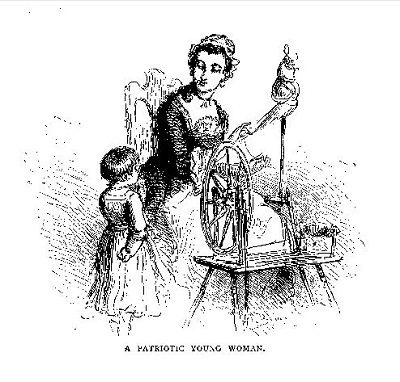
Embroidery and cross stitching sit at a peculiar situation in the history of feminist textiles. As Rozsika Parker writes in The Subversive Stitch, the construction of femininity is an important aspect of patriarchal domination, and for many women in the early modern period, embroidery was a part of that construction. The appropriately feminine woman stitched, and she stitched a particular kind of sampler or textile. How then, to square this patriarchal “expression of femininity” with the feminist desire to recognize women’s contribution to art and culture? How does resistance figure into these expressions of femininity? Parker’s musings on the subject are without conclusion, she characterizes it as “intractable.” The artistic expression of generations of women, choosing motifs and patterns for their samplers, should not be discounted. Their connection to the feminine ideal is an dimension of this artistic expression, just as men’s art connects to their own expressions of masculinity.
I have thoroughly enjoyed my own experiments cross-stitching; I have taken great satisfaction in having something to with my hands while I sit and watch television at night. I even brought the project to an Eagles watch party this weekend. The rhythm of the work is settling, although we will see whether I continue to feel that way once I leave the border pattern behind and turn to my attempt at design. Reading these texts this week, I felt a deeper connection to the girls and women discussed in the texts than if I had not yet picked up a needle. The creativity and artistry are one thing, but I have also gained a deeper appreciation of the technical skill and focus that cross stitching requires.