This week, we read a series of articles about commodification. In almost all of the articles (“The Cultural Biography of Things” exempted, although that article lays the foundation for later analysis), I saw a gendered component.
“Marx’s Coat,” by Peter Stallbrass, and its discussion of the pawn economy speaks to the Marxist analysis of both the commodification of objects and to the alienation of workers from means of production. The pawnshop economy painted a vivid picture of precarity, with families living from week to week and their things existing in a state of flux. Marx’s wife, Jenny, and his daughters bore this burden heavily: it was Jenny who made the trips back and forth to the pawnshop and who kept the books. Marx’s coat, and their things more broadly, dictated the places they could go, the people they could see, and the money they could produce for the household. Without his coat, he could not go to the British Museum and write. The undoing of things was the “annihilation of the self,” Stallybrass writes, a line which stuck with me. It may be a cliché, but “Marx’s Coat” demonstrates clearly the connection between self and object.
The Cultural Biography of Things continues this connection between self and object- Kopytoff complicates the dichotomy of person/thing, which of course historically has not be an absolute dichotomy. At various times in history, women and people of color are things, animals, and it is worth exploring when and where the boundaries of such categories become unstable.
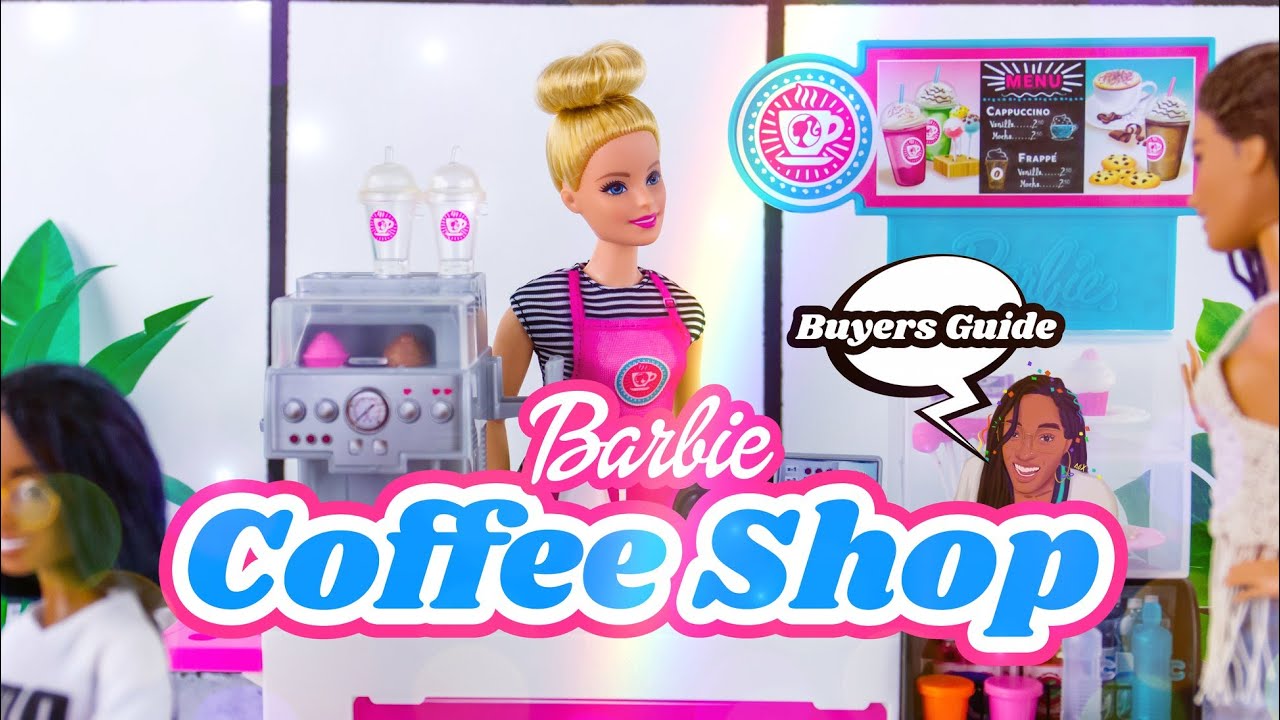
I especially enjoyed the article on Barbie; given that my object this semester is a doll which was produced and sold by Mattel, Barbie and her history are especially relevant to my studies. In addition, I played with Barbie dolls as a young girl (I think I had more than ten Barbie dolls– they were a big part of my childhood). Reading about the material culture of toys is so interesting because of the possibility of a disconnect between children’s imaginative play and a corporate narrative. While of course children’s play is impacted both by a company line and by larger cultural narratives surrounding appropriate gender behavior, I find toys (and especially Barbie dolls) so fascinating because at a certain point a company cannot control how children play with their toys. Attempts to desexualize Barbie may have succeeded in the eyes of parents, but for many, dressing and undressing Barbie dolls is a benchmark in exploring sexuality. Again, this is not to suggest that Mattel was unsuccessful in domesticating Barbie, on the contrary I found Pearson and Mullins’ argument persuasive.
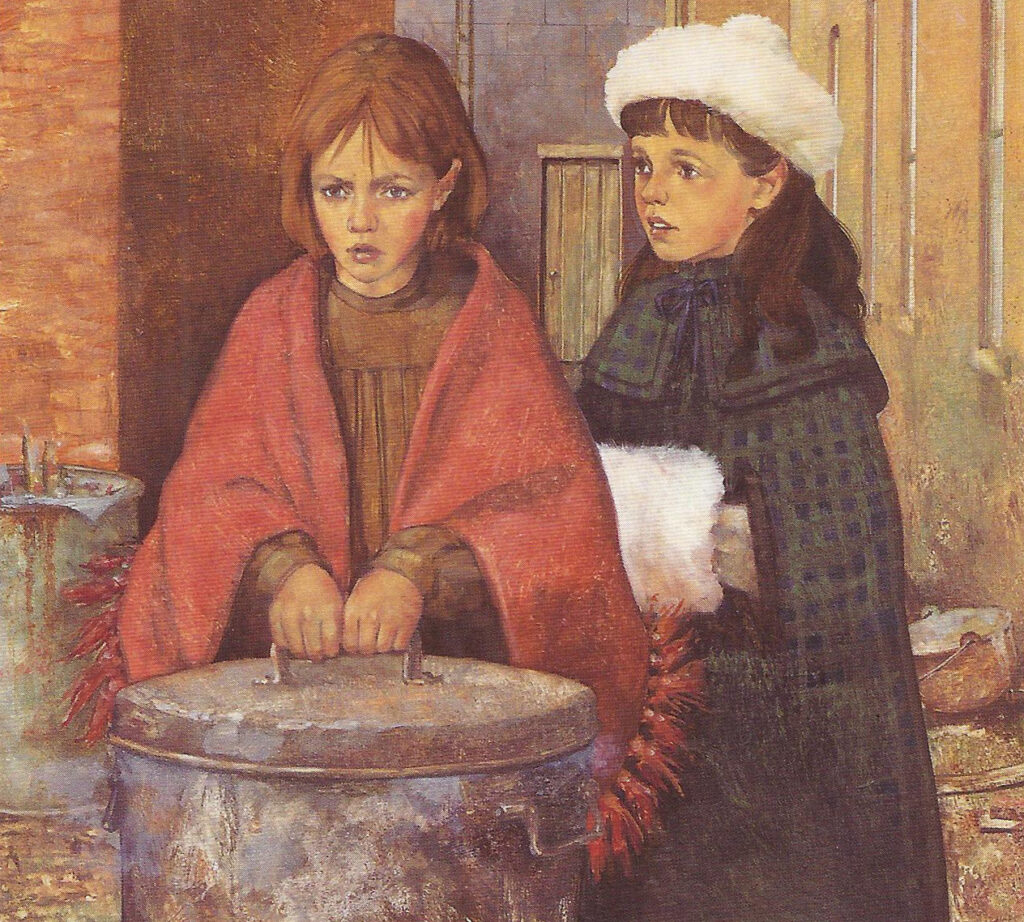
American Girl Dolls were created in the mid 1980s specifically to be a counter to dolls like Barbie– instead of the adult domestic picture that Barbie lived in (even while she spent time in space!) American Girl Dolls sought to explore girls throughout history pushing back against gender roles. Many of the dolls and stories explored adventure, resistance, and big social issues. There is a certain amount of political transference inherent in the American Girl Doll. Rather than create an overtly political doll, the historical nature of the stories often neuters the sometimes radical and political positions the characters take within their stories (Samantha frees her friend Nellie from a child sweat shop! Felicity tries to join the Continental Army!). Barbie, in contrast, in the 1980s, entered a state of domesticity she had only previously seen before in the mid-1960s. Now however, she was trying to have it all- careers and housework. Ken, meanwhile, is off playing football.
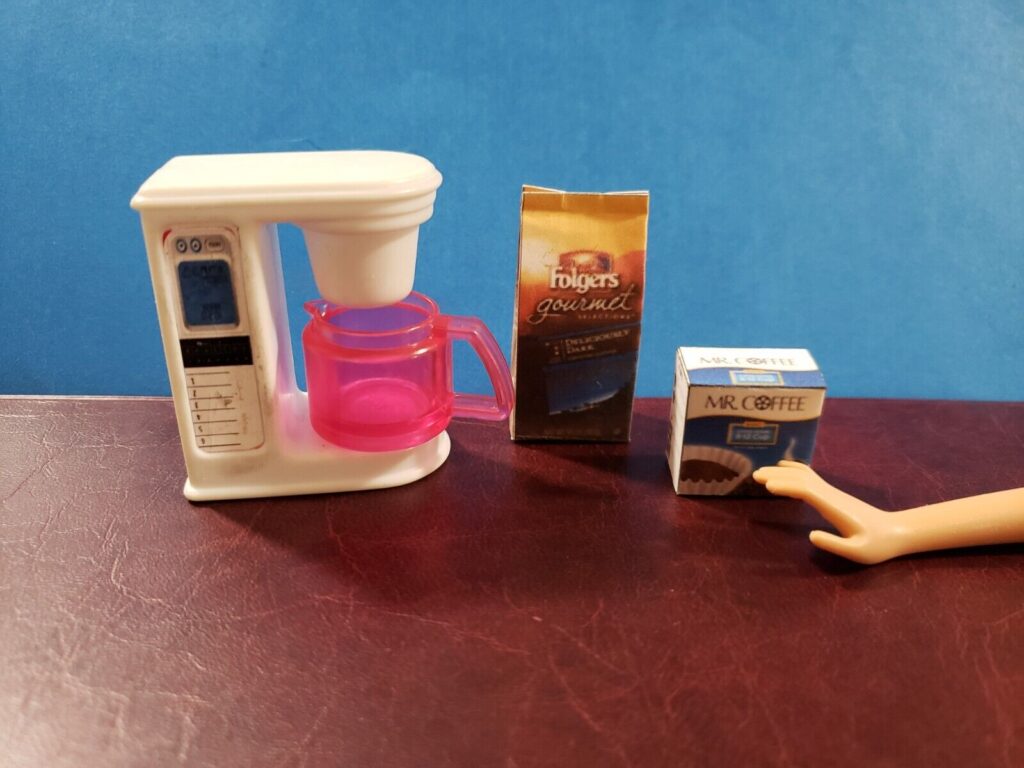
I wonder if Barbie ever had a Mr. Coffee? I noticed that in the mid-1960s, as Mattel attempted to put Barbie in the home doing housework, many of her early sets came with a coffee maker. Maybe it was Ken who first bought the Mr. Coffee, after seeing Joe DiMaggio use it during a commercial. Mr. Coffee’s successful ad campaign and spokesman gig led to its inclusion in the American corporations who have achieved generic success (think Kleenex and Band-Aid), all while convincing American men that it was OK to make a cup of coffee. I have a Mr. Coffee on my kitchen countertops, a fact I had not noticed before reading this article.