
Remote Obstetrics Monitoring Systems
SEPTA Electronic Payment Project
Survey and Measurement using Avatar and Robotic Technology (SMART)
Remote Obstetrics Monitoring Systems

Wireless fetal monitoring will keep mothers, doctors and babies safer.
During a mother’s pregnancy, the physiology and activity of the baby should be frequently monitored to ensure fetal health. But the monitoring comes with an issue that the mother should frequently go to the hospital and suffer from the long monitoring procedure without moving away from bed.
To resolve such a problem, the Wireless Fetal Monitoring (WFM) / Fetal Monitoring Network (FMN) system is proposed. The FMN system takes the concept of Body Sensor Network, which allows sensors be portably attached on human body and transmit data wirelessly to a local sensor processing unit which can be called a base station. Base stations will then relay the data collected to a remote centralized server for further analysis and medical reference.
SEPTA Electronic Payment Project
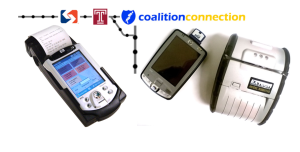
The objective of this project is to develop a prototype system by
using a front end read only approach incorporated with
non-proprietary commercial-off-the-shelf (COTS) components.
The idea is to use the mobile phone as a communication device
and as well as to validate ticket information on the smartcard
through a backend sever using the short text message
sent by mobile phones. It provides us with physical measurements
of time delays and possible bottle necks of the operations.
Also, the system can provide coalition members with a generic
approach for a read only process system and
determine what the feasibly practical onboard ticket sale processes are accordingly.
Survey and Measurement using Avatar and Robotic Technology (SMART)
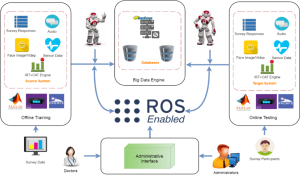
Recent advances in interactive technologies, such as humanoid robotic systems and computer avatars have emerged within healthcare and education settings. Interactive technologies have seen widespread use as teaching technology platforms, for the administration of patient-reported outcomes (PROs), as well as training, care and opportunities for social interaction.
Physiological sensor data from examinees will be meshed with the real-time video and environmental data from the home assistant hub and cross referenced with the testing database to adaptively administer PROs. In this project, a remote web-based user interface will be provided to communicate with a humanoid robot with respect to the same PROs.