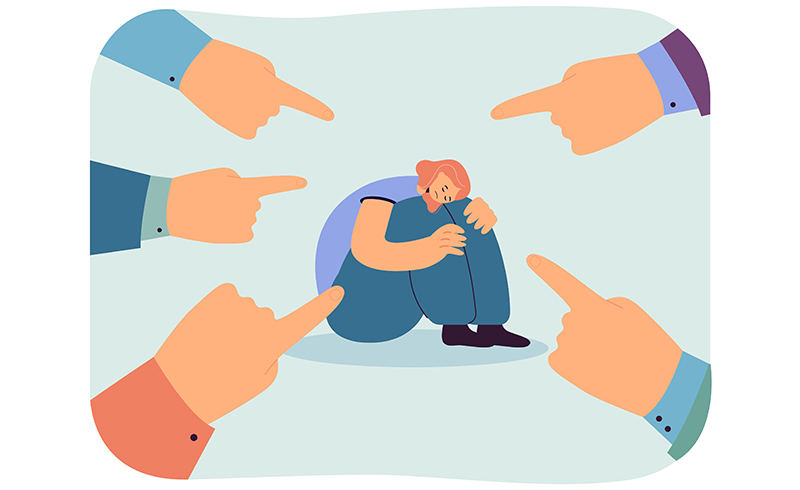
What is Stigma?
- “Stigma refers to negative attitudes, beliefs, and stereotypes people may hold towards those who experience mental health conditions” (CDC).
How can stigma affect people with bipolar disorder?
Emotional and Psychological Impact on Individuals
“The stigma impact scale revealed that individuals with bipolar disorder felt more psychosocial impact from their experiences with stigma than did people with depression. As well, they reported a more negative impact on their family members” (Lazowski et al.,8)
“people with bipolar disorder experience more selfstigma, especially related to portrayals in the media, and
this may be related to the greater impact felt from their
stigmatizing experiences” (Lazowski et al.,8)
“We found that one-third of the impact of stigma experienced by our sample subjects was explained by stigma experiences, and another 5% was explained by diagnosis” (Lazowski et al.,8)
- More stress and anxiety can be caused when they fear of negative comments, beliefs and stereotypes where others judge.
- Self-Stigma can be affected by negative stereotypes making them believe that they blame themselves or shame or feeling negative about themselves.
- Stigma can also lower their esteem where the risk of depression can increase.
Isolation
- “Stigma impairs people’s quality of life and leads to their isolation and rejection of interpersonal relationships. Te rejection from society and low self-esteem, following the fear of rejection, weakens living conditions, reduces income, and causes unemployment for people with bipolar disorders” (Latifian et al, 2).
- Individual might isolate themselves from relationships with friends, loved ones, and even in professional career to avoid stigma.
Avoiding Help
- “Often, people avoid or delay seeking treatment due to concerns about being treated differently or fears of losing their jobs and livelihood. That’s because stigma, prejudice and discrimination against people with mental illness are still very much a problem” (American Psychiatric Association).
- Individual can avoid getting diagnosed and treated from fearing of being labeled by stereotypes.
Common Misconceptions vs Truths (UNICEF)
Misconception: If a person has a mental health condition, it means the person has low intelligence.
UNICEF. (n.d.). Busted: 7 myths about mental health. Back to UNICEF.org. https://www.unicef.org/parenting/health/busted-7-myths-about-mental-health
Fact: Mental illness, like physical illness, can affect anyone regardless of intelligence, social class, or income level.
Misconception: Adolescents who get good grades and have a lot of friends will not have mental health conditions because they have nothing to be depressed about.
UNICEF. (n.d.). Busted: 7 myths about mental health. Back to UNICEF.org. https://www.unicef.org/parenting/health/busted-7-myths-about-mental-health
Fact: Depression is a common mental health condition resulting from a complex interaction of social, psychological, and biological factors. Depression can affect anyone regardless of their socioeconomic status or how good their life appears at face value. Young people doing well in school may feel pressure to succeed, which can cause anxiety, or they may have challenges at home. They may also experience depression or anxiety for no reason that can be easily identified..
Misconception: A mental health condition is a sign of weakness; if the person were stronger, they would not have this condition.
UNICEF. (n.d.). Busted: 7 myths about mental health. Back to UNICEF.org. https://www.unicef.org/parenting/health/busted-7-myths-about-mental-health
Fact: A mental health condition has nothing to do with being weak or lacking willpower. It is not a condition people choose to have or not have. In fact, recognizing the need to accept help for a mental health condition requires great strength and courage. Anyone can develop a mental health condition.
Stories & Testimonials
Read Claire Morrison’s Story (NAMI)
By Claire Morrison
When I was a child, I was the happiest kid around. It all changed when I became a teenager. I became so depressed that I couldn’t make myself get out of bed some days. Other days, I’d become so anxious that I couldn’t function. I began self-harming when I was 15. I kept it a secret for a long time but eventually, I slipped up and my mother found out. She immediately set up an appointment with a psychiatrist for me. I remember I kept thinking “What will happen if my friends find out I’m going to see a shrink?”
I was diagnosed with depression and anxiety, started on medication and forced to meet with countless therapists. I resented all of it. I told no one because I was afraid my friends wouldn’t want to associate with me anymore. I was very angry and resentful about being forced into it and during those first few years, I never saw a therapist more than once or twice. I’d always tell my mom there was something wrong with each of them and she would take me to the next one. I was so scared that people would judge me or look down on me that I didn’t even want help. Unfortunately this is the case for many people. The stigma against mental illness in society prevents many people from seeking help.
I’ve continued to struggle for the past six years. I developed new symptoms and some of the old symptoms worsened. I’m currently diagnosed with bipolar disorder, depression, anxiety and ADD. I’ve had times when I withdrew from the world and felt absolutely worthless, I’ve dealt with the highs and lows of bipolar disorder, I’ve struggled with anxiety attacks and I’ve had countless relapses in my struggle to overcome self-harming which had become an addiction for me. Over the years, I’ve found out that many people really do stigmatize people with mental illness. I’ve had conversations with people who were unaware of my issues who referred to people with mental illnesses as ‘crazy.’ I’ve had situations where I’ve made a new friend only to inform them of my diagnoses and watch them quickly drift away.
The thing that opened my eyes the most as to how bad the problem is happened in 2013. After a series of very stressful events, my mother began to experience delusions, hallucinations and extreme paranoia and was hospitalized for a week. She was then diagnosed with bipolar 1 with psychotic features. Though she is fairly well managed most of the time, she has been hospitalized three times at two different inpatient behavioral units over the past three years. This has impacted our family in numerous ways. My mother had to quit her job. Some of my brother’s friends whose parents found out about my mother were no longer allowed to come over. A little more than a year ago, I was engaged. A big contributing factor to our breakup was the fact that he thought my mother was crazy and didn’t want to have anything to do with her.
Mental illness stigma has affected my life in many different ways. I try to educate people when I can. I am currently doing my internship at the inpatient behavioral unit at the hospital where a big part of their recovery process is helping the patients to overcome the self-stigmatization. A mental illness is just one characteristic of what makes a person who they are. Unfortunately, many people get caught up in labeling themselves which limits their ability to think of themselves as anything more than their diagnosis.
Though this is a hard thing for anyone to go through, I’m glad it happened to me. It helped me discover what I want to do in life, which is counsel people with mental illness. I’d like help those who are struggling just like I did. No one should feel ashamed of something beyond their control. You don’t choose to have a mental illness, just like you don’t choose to have a physical illness. I’m actually doing my senior thesis on mental illness stigmas. I feel like my interest in this topic has helped me a lot when it comes to accepting myself.
I don’t go around with a megaphone announcing my list of diagnoses, but I no longer hide it. I’m not ashamed or embarrassed anymore. If someone has an issue with it or it makes them feel uncomfortable, I try to talk with them about it. Unfortunately, some people are unable to let go of their prejudices. But this has allowed me to weed out the people who would make me feel worthless and ashamed. Many people have not been able to overcome their self-stigmatization, however, which I find heart-breaking. No one should have to go through life feeling like they can never be more than a label.
Nami, & Nami. (2024, October 17). Stigma hurts everyone. NAMI. https://www.nami.org/personal-stories/stigma-hurts-everyone/
Ways to combat stigma
- Getting treatment (Mayo Clinic).
- Do not isolate yourself (Mayo Clinic).
- Do not let stigma create shame (Mayo Clinic).
- Reach out for help (Mayo Clinic).
- Speak up about mental health and spread awareness (Eisenberg Family Depression Center).
- Be careful with language (Eisenberg Family Depression Center).
- Gain perspective (Eisenberg Family Depression Center).