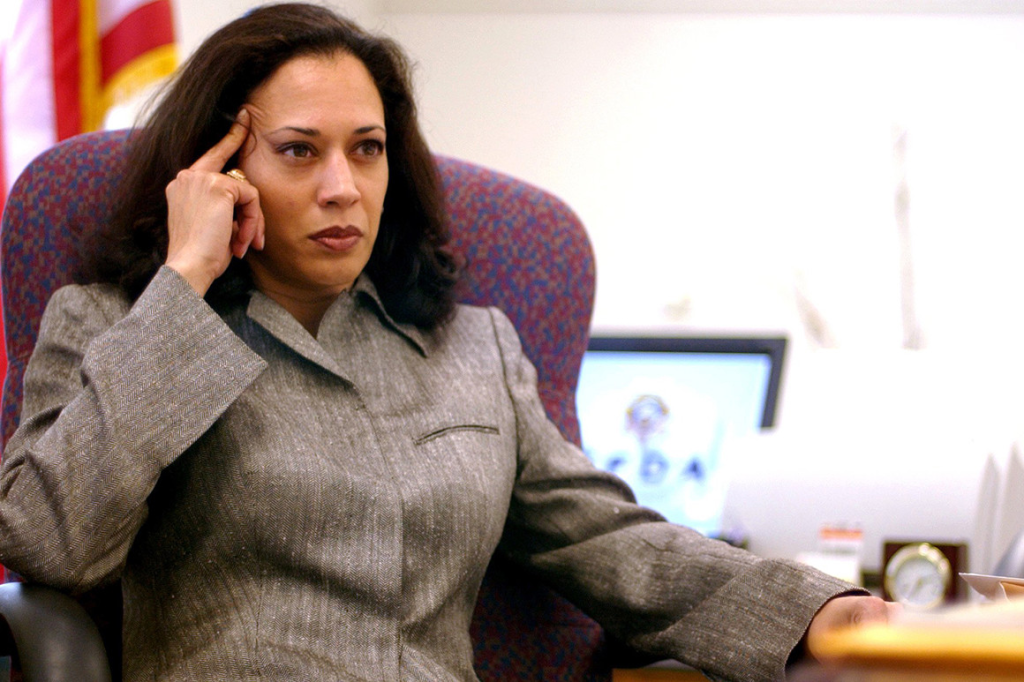
Image: Kamala Harris by Sean Connelley/MediaNews Group/The Mercury News via Getty Images
In a previous post, I celebrated the genius of Kimberlé Crenshaw and her work on intersectionality, a term that continues to shape how we understand identity, power, and systemic inequality. This week , I want to go deeper. Specifically, I’m reflecting on the article Toward a Field of Intersectionality Studies: Theory, Applications, and Praxis by Cho, Crenshaw, and McCall (2013), which expands the conversation beyond theory and into the realm of legal discourse and institutional practice.
The authors argue that intersectionality is not just a lens, but it’s a field. It’s a way of naming and navigating the layered experiences of those who live at the margins, especially Black women whose realities are often overlooked and undervalued. So what does this mean for the workplace? For Black women in professional settings? When I think about DE&I laws under the current administration, I see a tension. On one hand, there’s a push for visibility, more data, more metrics and more statements. On the other, there’s a political climate that often weaponizes “diversity” as a threat to tradition or neutrality. Intersectionality reminds us that neutrality is a myth for Black women. Every policy, law and workplace norm is shaped by power. Power that is never evenly distributed.
This relates directly to my project because Black women are competing against government policies, in addition to mistreatment and microaggressions, to be seen in an environment where they aren’t. The people who are in the highest forms of power often look the same — male, female and white. Never a Black woman. If there’s an underrepresentation of Black women in all three branches of government, how can they influence laws and encourage change? Afterall, we’ve just elected the first Black woman to the U.S. Supreme Court in 2022 and are still struggling to elect a Black, overly-qualified woman to the highest seat in the land, president of the United States.
*Whew, that was a lot…*
This week I completed the LinkedIn Learning module Equity First: The Path to Inclusion and Belonging to learn more about DE&I in the workplace. The training, led by Mary-Frances Winter explains what equity is and how it differs from equality, a common misunderstanding today. I plan to use some of her ideas and teachings in my final writing.
I previously mentioned I was interested in having Professor Geoffrey Baym be a member of my committee, and since then we had a chance to talk! Unfortunately, Professor Baym isn’t accepting any official committee member slots next semester, but he did agree to help me shape and articulate my ideas based on his teachings as it relates to my project. This week, I’ll follow up with a few professors I reached out and haven’t heard from yet.
Time is flying, but I guess that’s what happens when you’re having fun.
Sources:
Cho, S., Crenshaw, K. W., & McCall, L. (2013). Toward a field of intersectionality studies: Theory, applications, and praxis. Signs: Journal of Women in Culture and Society, 38(4), 785–810.https://doi.org/10.1086/669608
Connelley, S. (2019). Kamala Harris at campaign event [Photograph]. MediaNews Group/The Mercury News via Getty Images. In Politico Magazine.https://www.politico.com/magazine/story/2019/01/24/kamala-harris-2020-history-224126
Comments