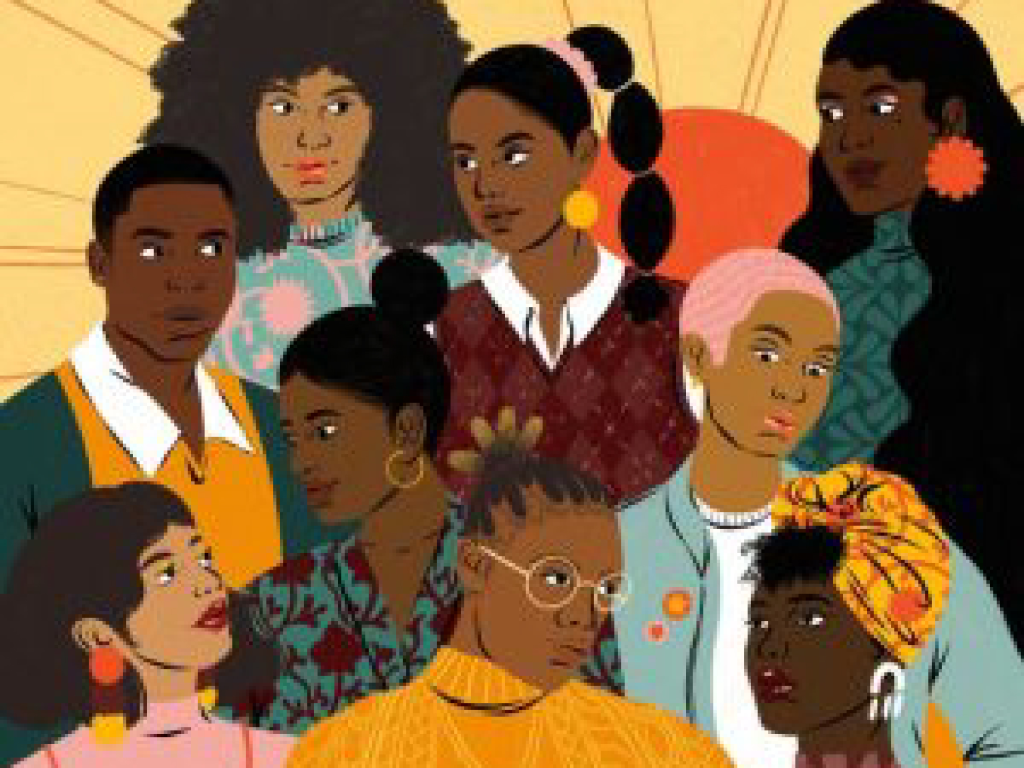
I was first introduced to Kimberlé Crenshaw’s work during my first semester of graduate school. I remember hearing about her idea of intersectionality and thinking, wow… this is spot on. It didn’t feel like a theory, it felt like truth. Crenshaw uses the metaphor of a traffic intersection to describe intersectionality. Imagine standing in the middle of a busy intersection, with cars coming from all directions. If you get hit, you don’t always know which car caused the damage because they’re all coming at you. That’s what intersectionality means for Black women. We often get hit from both sides, racism and sexism, and the deeper you dive, the more intersectionality is revealed across other categories.
Sylvia Smith’s article builds on Crenshaw’s framework to show how this plays out in real life, especially in professional settings. She shares examples of Black women being passed over for promotions, silenced in meetings, or judged for not fitting specific standards. I want to explore how this connects to code-switching. If Black women aren’t accepted authentically for who they are, how do they navigate that? As I mentioned before, code-switching is not just about language; it can also involve appearance. If Black women see other races being treated differently, does it make them want to conform to fit that standard? I’m excited to explore this more.
So far, I’ve created my outline for my paper and identified some new readings that could potentially be used for research. I haven’t done much beyond that. I’m more concerned about the written aspect of the project than the media aspect, so I want to spend more time focused on building what I want my paper to be. I got some feedback in the last assignment that I can begin drafting some of my paper now, so that’s what my next steps are.
Sources:
Crenshaw, K. (2013). Demarginalizing the intersection of race and sex: A black feminist critique of antidiscrimination doctrine, feminist theory and antiracist politics. In Feminist legal theories (pp. 23-51). Routledge.
Smith, S. (2013). Black feminism and intersectionality. International Socialist Review, 91(11), 1-16.
Comments